
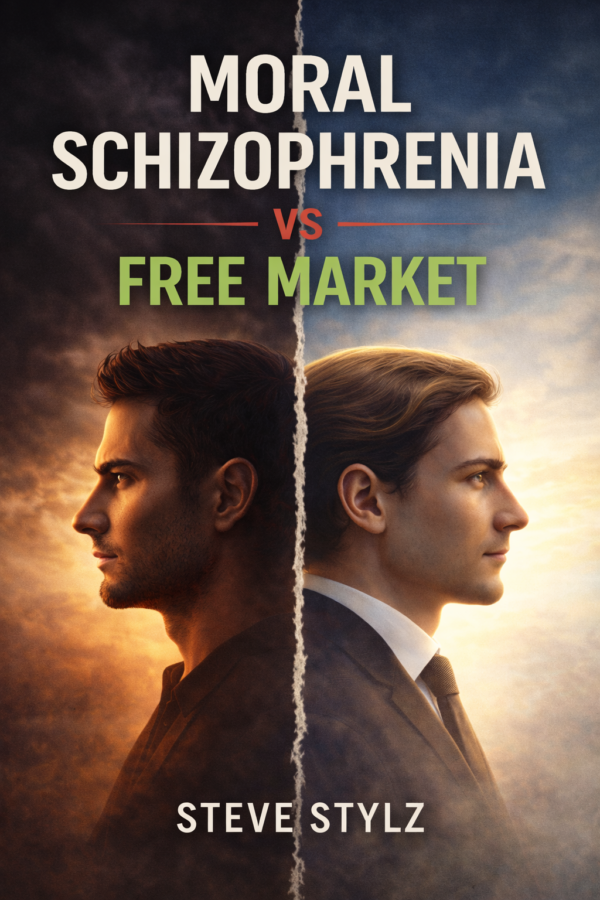
“Moral Schizophrenia vs. Free Market” challenges a contradiction most people sense but rarely put into words.
In everyday life, people understand morality clearly: don’t lie, don’t steal, don’t cheat, don’t harm others. These principles guide how we treat neighbors, customers, friends, and family. Yet when it comes to governments, corporations, and institutions, those same rules often seem to bend, or disappear entirely.
This book explores that divide.
Through real historical events, everyday examples, and clear reasoning, it examines what happens when society operates under two moral systems: one for individuals and another for those in power. From financial crises and war to taxation, regulation, and corporate influence, the book highlights how this “split morality” shapes trust, behavior, and the structure of modern life.
At the same time, it presents a different perspective, one rooted in voluntary cooperation. Instead of force, control, or imposed authority, the book looks at how trust, reputation, and mutual agreement already guide most human interactions. From small daily exchanges to entire communities, it shows how moral behavior often emerges naturally when people are free to choose.
This is not a political argument in the traditional sense. It’s a moral one.
“Moral Schizophrenia vs. Free Market” invites readers to question why the same actions are judged differently depending on who performs them, and what might change if one consistent standard of morality were applied across the board.

Reviews
There are no reviews yet.